Early in your training, you will hear the word zanshin used often—sometimes carefully explained, sometimes spoken as though you should already understand it. This can be mildly unsettling, like being handed a map halfway through a journey and being told you’re already late.
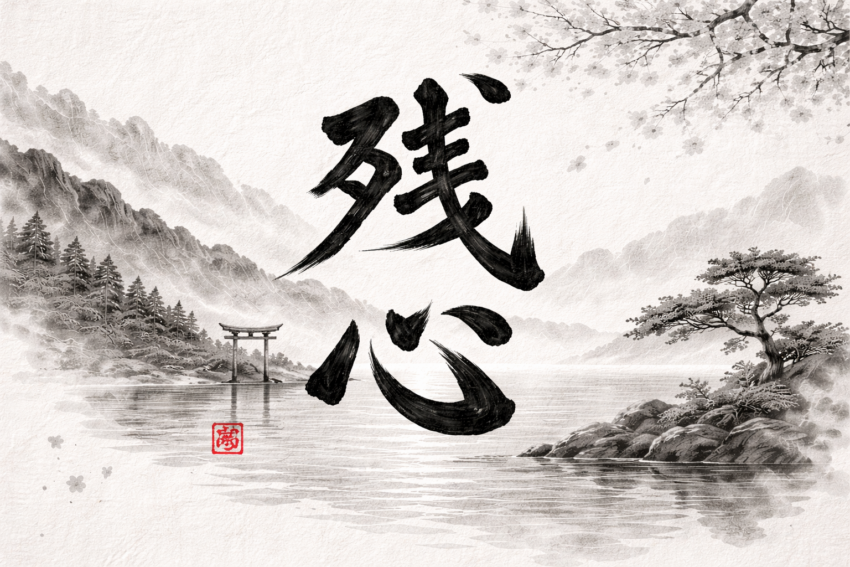
Zanshin (残心) is commonly translated as “the remaining mind” or “lingering awareness.” Both translations are accurate, and neither is especially helpful at first. Beginners often imagine something dramatic: an intense stare, clenched fists, perhaps the emotional posture of someone expecting trouble at any second. This is understandable. It is also wrong.
Zanshin is not tension.
It is not paranoia.
And it is definitely not pretending you are in a movie.
Zanshin is simply attention that continues after the technique is finished.
This is why instructors talk about it early. Zanshin is not an advanced add-on reserved for black belts. It is a habit that must be grown slowly, the same way balance or posture is. If you wait until later to think about it, you will spend years unlearning habits that should never have been installed in the first place.
For beginning and intermediate students, zanshin answers a very practical question: what happens after I move?
Most new students put all their attention into the action itself—the punch, the block, the throw, the escape. Once the movement is over, the mind relaxes, wanders, or turns inward to evaluate how it went. This is normal. It is also exactly where problems begin.
Zanshin means that when the movement ends, awareness does not collapse with it. The body settles, the technique finishes, and the mind remains present—aware of balance, distance, partners, and surroundings. Nothing is forced. Nothing is held tight. Attention simply stays awake.
Think of it this way: zanshin is not being on edge; it is being not done yet.
Because zanshin is subtle, it is often misunderstood. Enthusiastic beginners, eager to do things correctly, tend to replace understanding with effort. This leads to some common mistakes. One is the aggressive stare—eyes wide, jaw set, glaring into space after a technique as if daring the universe to respond. This is not zanshin. It is a pause filled with attitude. Awareness does not require intimidation.
Another mistake is freezing the body. Students lock joints, clench muscles, and hold their breath to prove they are “finished.” What this actually proves is that the body is under strain. A rigid body is not ready; it is busy holding itself together.
There is also the temptation to look intense for appearance’s sake. When students sense that something important should be happening after a technique but are unsure what it is, they substitute expression for understanding. Zanshin, unfortunately, does not care how it looks.
At its core, this confusion comes from mixing up alertness with stiffness, and awareness with aggression. Alertness is light; it allows movement in any direction. Stiffness is heavy; it delays response. Awareness is receptive; aggression narrows focus. Zanshin is not about projecting threat. It is about remaining open to information.

Physically, zanshin is first felt in the body. Balance after movement is the clearest sign. After a strike, throw, or breakfall, the body should settle naturally rather than stumble or lock. You should feel grounded, as if your weight knows exactly where it belongs. If you need an extra step to recover, the technique may have worked, but zanshin did not arrive with it.
Breathing tells the same story. Zanshin does not hold its breath. After a technique, breathing should continue smoothly—perhaps elevated, but unforced. When the breath freezes, the mind usually has as well.
The hands are another clue. After a technique, they should return to guard naturally, without being snapped back or consciously placed. In karate, this might be a relaxed but ready kamae. In jiu-jitsu, it may be hands positioned to frame, grip, or protect space. When the hands wander or freeze, awareness has drifted away from the body.
This matters because in both Chitō-ryū Karate and Canadian Jiu-Jitsu, techniques are not isolated events. A strike assumes there may be another. A throw assumes resistance on the way down. A breakfall assumes you may need to move again immediately. Zanshin is the physical state that makes those assumptions calm rather than stressful.
In Chitō-ryū Karate, zanshin is built directly into how techniques are finished. After a punch, kick, or block, nothing dramatic is supposed to happen. The eyes remain active without staring. The hips and stance stay alive without bouncing. The body remains ready for the next technique without pausing to admire the last one.
You see this clearly in kihon, where each count should finish cleanly, without rushing or freezing. In kata, zanshin lives in the pauses and turns—moments often mistaken for rest, but actually requiring the clearest awareness. In kumite, zanshin is tested immediately, especially after scoring, when the temptation to relax is strongest.
In Canadian Jiu-Jitsu, zanshin becomes unavoidable. Throws and locks work perfectly right up until the practitioner mentally checks out. After a throw, zanshin means staying aware of the partner on the ground—watching hands, hips, and legs, not just the head. Many techniques fail after they “work” because attention relaxes too soon. Zanshin is control without panic: calm, organised awareness that allows you to stabilise, transition, or disengage as needed.
There is also a mental side to zanshin. Beginners often fall into celebration, freezing, or second-guessing. All three pull attention out of the present moment. Mental zanshin means letting awareness continue past success or failure. Analysis belongs before or after movement, not during it. A quiet mind is not an empty one; it is a mind that is not busy narrating.
Instructors teach zanshin using simple cues: finish your technique, don’t admire your work, be ready for the next move. These are not about speed or force. They are reminders not to stop too early. Simple drills—follow-up movement, re-guarding, brief scanning—teach zanshin naturally by making mental collapse impossible.
Zanshin also exists beyond the dojo. You use it when crossing the street, carrying something heavy, or de-escalating conflict. In each case, awareness continues until the situation is truly resolved. Zanshin is not fear or anxiety; it is calm readiness.
Zanshin does not arrive all at once, and it cannot be forced. For white to green belt students, awareness comes first. Refinement comes later. You are not expected to perfect zanshin—only to notice when it disappears.
Zanshin is not something you add to your training.
It is something you stop losing.
Finish the technique.
Stay present.
Let awareness remain.
That is enough—for now.